Research artefact
LumiJo
A mobile journaling prototype exploring how AI-generated “words of wisdom” can offer new perspectives on personal experiences.
Abstract
Self-reflection plays important roles in psychological wellbeing and personal development, yet its effectiveness can be diminished by our own biases. Existing approaches to supporting self-reflection such as self-tracking or journaling often fall short in helping move beyond their immediate perspectives. This paper explores a novel interaction design approach to self-reflection through LumiJo, a mobile prototype that supports re-interpretation of one’s lived experiences with new perspectives via LLM-generated words of wisdom — short, reflective statements intended to offer insight into human experience — based on users’ jotted notes. A three-week study with 12 participants suggests LumiJo’s potential to enrich reflective experience by introducing unexpected, light-hearted, and mood-lifting insights that encourage users to reconsider their experiences. The findings further highlight the importance of addressing relevance and transparency through interaction design for LLM-powered reflective systems. We end by discussing implications of using LLMs to provide insightful, humorous, relevant and transparent feedback.
Screenshots
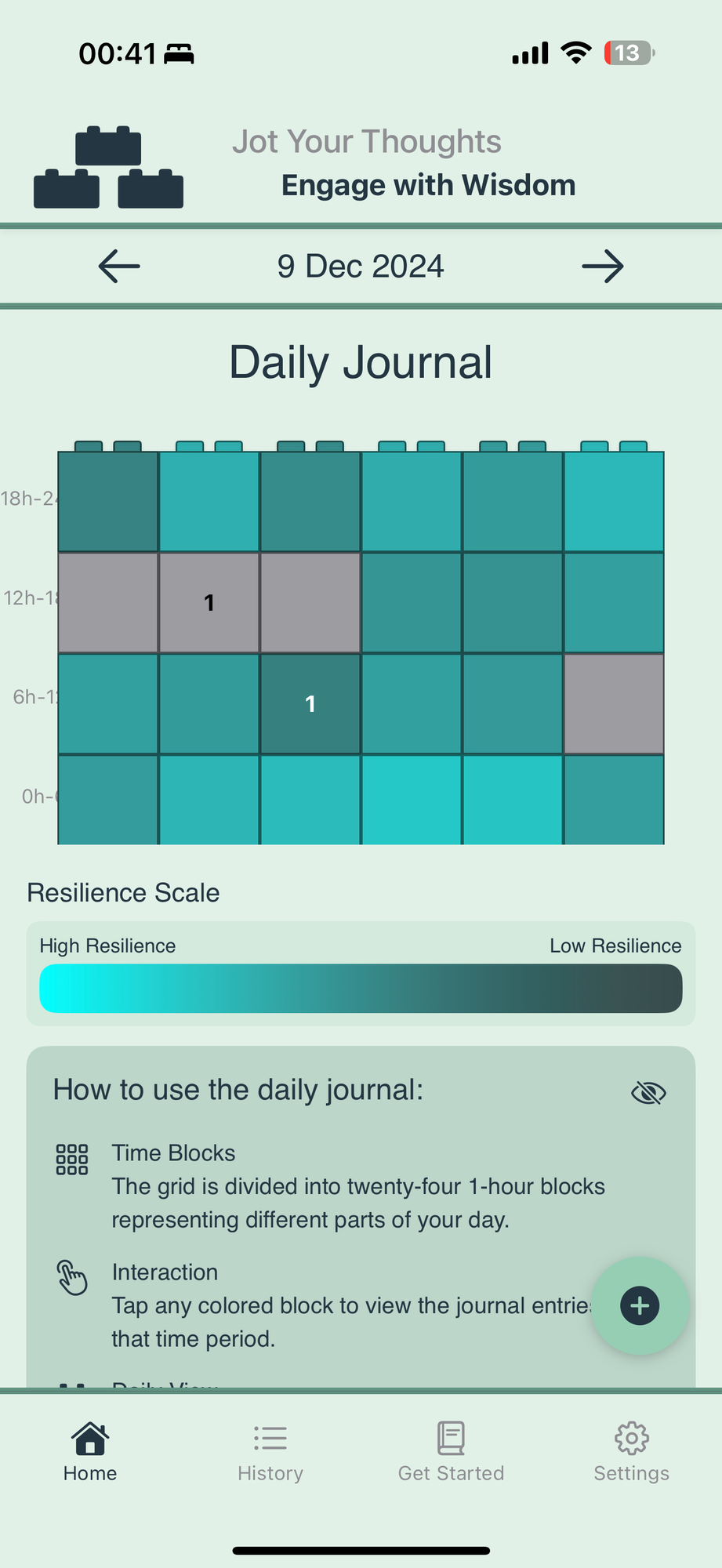
Daily overview
The home screen presents journal entries across the day alongside hourly resilience levels. Users can tap an hour to review entries from that period.
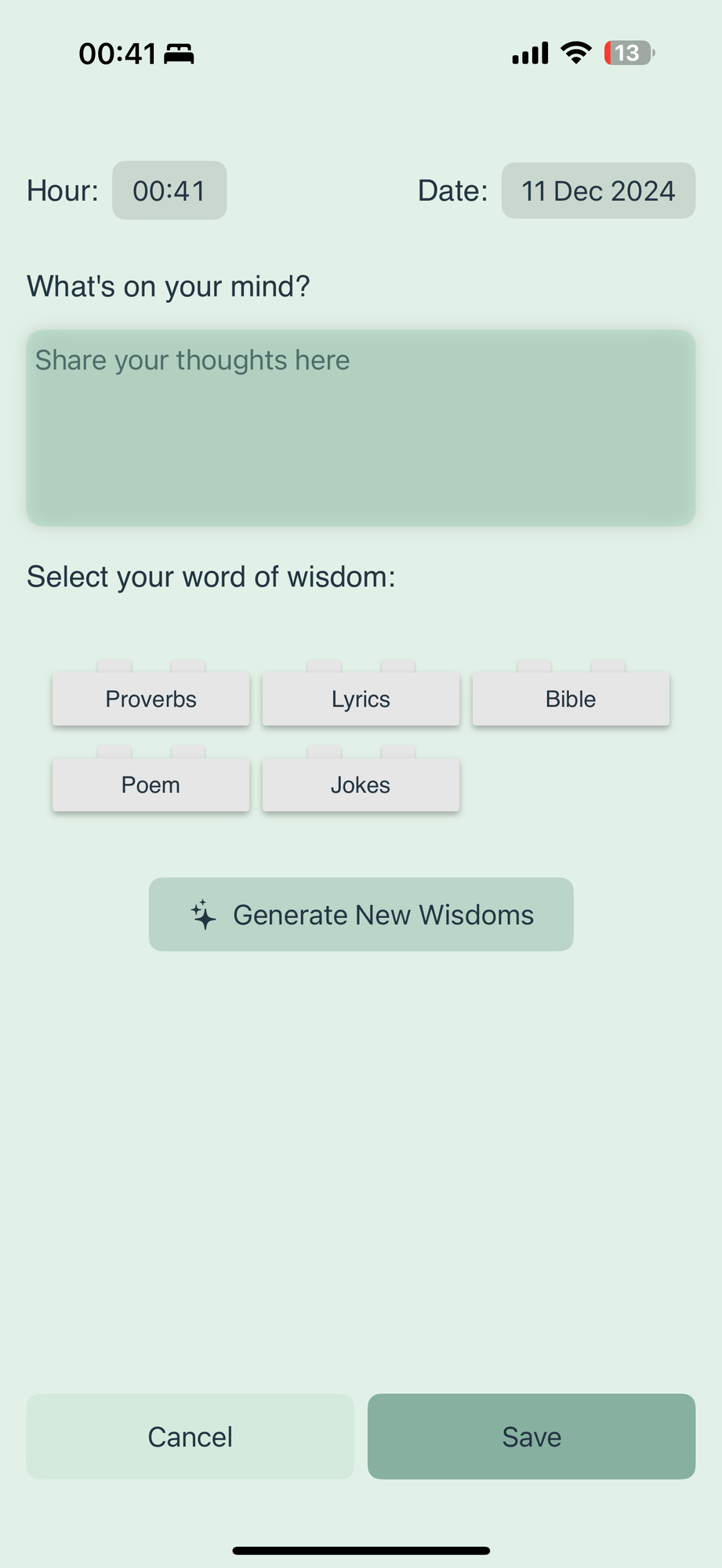
Writing and reflection
Users jot down an experience, then choose a category—such as proverbs, lyrics, Bible passages, poems or jokes—for generated words of wisdom.
Technology stack
-
Apple iOS
LumiJo was developed as a mobile application for iOS.
-
HealthKit and Apple Watch
HealthKit reads heart-rate variability (HRV) data from Apple Health for users with a compatible Apple Watch. HRV data is stored locally on the user’s device and visualised as hourly resilience levels.
-
OpenAI GPT-4
The app sends anonymised journal notes and the selected wisdom category to GPT-4 to generate short reflective responses. We limited responses to 200 characters.